
Understanding Commercial Garage Door Torsion Springs: Installation, Maintenance, and Safety
Commercial garage doors are robust, heavy-duty systems designed for frequent use and security in industrial and business settings. Central to their operation are torsion springs, which counterbalance the door’s immense weight, making it possible to open and close smoothly. Proper installation, regular maintenance, and strict adherence to safety protocols by certified professionals are paramount to ensure longevity and prevent dangerous malfunctions.
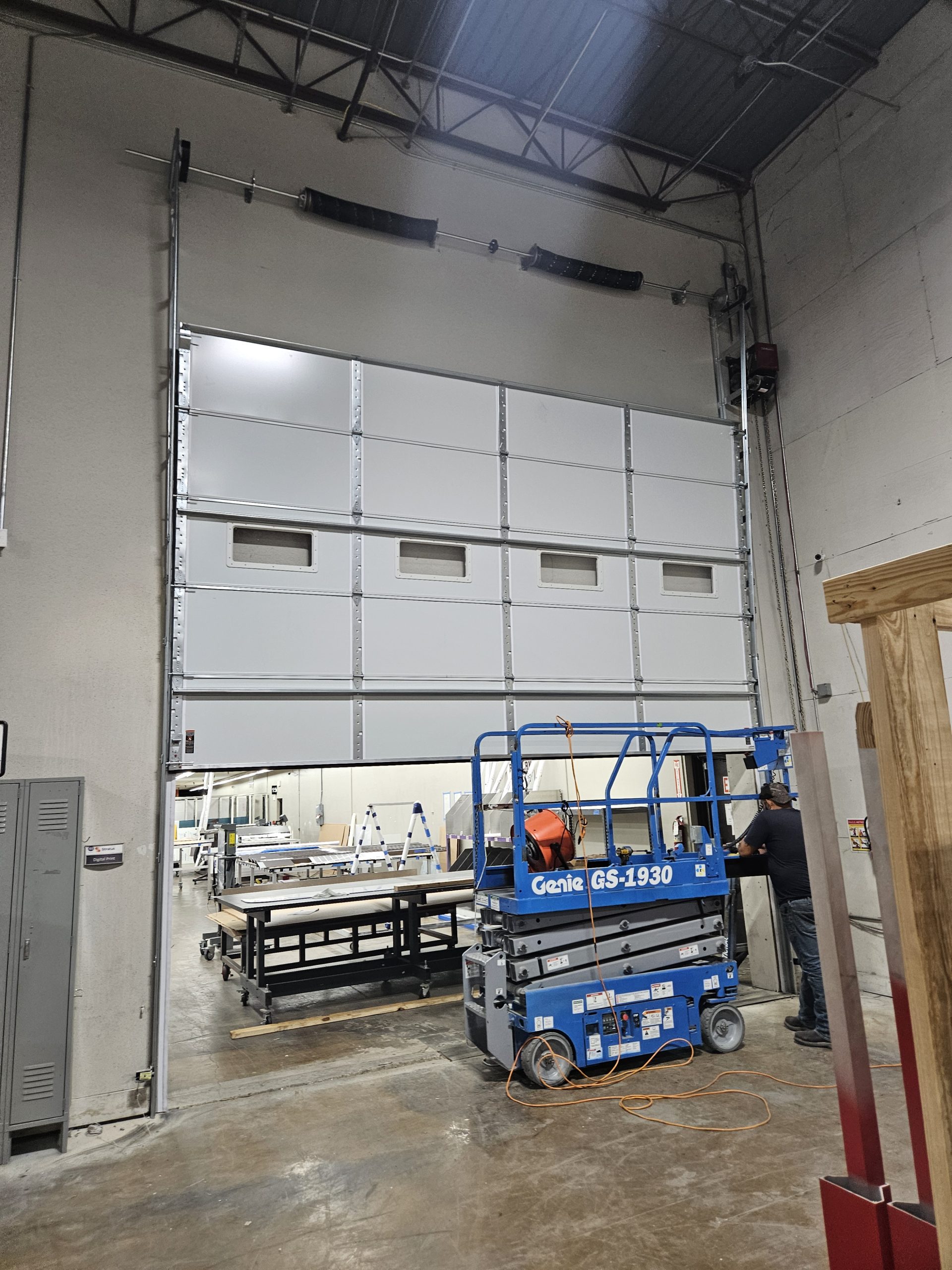
The image provided offers a glimpse into the complex world of commercial garage door systems, specifically highlighting the torsion spring assembly and a commercial opener during what appears to be an installation or significant maintenance procedure. The presence of a Genie GS-1930 scissor lift and a technician underscores the specialized nature of this work, which should never be attempted by untrained individuals.
What Are Commercial Garage Door Torsion Springs?
Torsion springs are the muscle behind your commercial garage door. Unlike extension springs, which stretch along the horizontal tracks, torsion springs are mounted on a metal shaft directly above the door opening. They work by twisting and coiling as the door closes, storing potential energy. When the door opens, this stored energy is released, counteracting the door’s weight and allowing the opener to lift it with minimal effort. Commercial doors, being significantly heavier and larger than residential ones, typically utilize multiple, larger torsion springs to handle the increased load and operational demands.
The Role of the Commercial Garage Door Opener
While torsion springs do the heavy lifting, the commercial garage door opener (also known as an operator) provides the automated power to initiate and control the door’s movement. In the image, a chain-driven operator is visible, a common type for commercial applications due to its durability and power. The opener works in conjunction with the perfectly balanced spring system. If the springs are improperly tensioned or broken, the opener will struggle, wear out prematurely, or fail to operate the door at all, posing significant safety risks.
Why Professional Installation and Maintenance are Crucial
Installing or maintaining commercial garage door torsion springs is not a DIY task. The springs are under extreme tension, often hundreds of pounds per square inch, making them incredibly dangerous if mishandled. A sudden release of this tension can cause severe injury, dismemberment, or even death. Professional technicians possess the specialized tools, training, and experience to safely install, adjust, and replace these components.
CRITICAL SAFETY RULE: NEVER attempt to repair, adjust, or replace garage door torsion springs, cables, or heavy door panels yourself. These components are under extreme tension and can cause severe injury or death if mishandled. Always contact a qualified and certified garage door professional for any service involving these parts.
Regular professional maintenance ensures that your torsion springs are properly lubricated, balanced, and free from wear and tear. Technicians will inspect for signs of rust, corrosion, or fatigue, and make necessary adjustments to maintain optimal door operation and extend the lifespan of your entire system.
Common Signs of Torsion Spring Issues
Recognizing the early warning signs of a failing torsion spring system can prevent more extensive damage and ensure safety. Here are some indicators:
- Loud Bang: Often the sound of a spring breaking, which can be startling.
- Door Feels Extremely Heavy: If the door is difficult to lift manually, or the opener struggles, the springs may be losing tension or one might be broken.
- Uneven Door Movement: The door may appear crooked or move unevenly when opening or closing.
- Visible Gap in Spring: A broken torsion spring will typically show a visible gap of an inch or two in the coil.
- Cables Off Drums: If the door is unbalanced, cables can come off the cable drums, leading to further operational issues.
Troubleshooting Commercial Garage Door Spring Issues
While you should never attempt to fix these issues yourself, knowing what to look for can help you describe the problem accurately to a technician.
- Observe if the door is opening or closing smoothly.
- Listen for unusual noises during operation.
- Visually inspect the springs (from a safe distance) for any visible breaks or gaps.
- Check if the door is balanced (only if safe to do so, and never with a broken spring).
Causes vs. Solutions for Torsion Spring Problems
| Cause of Issue | Professional Solution |
|---|---|
| Worn-out or broken springs (due to fatigue/cycle life) | Replacement of springs by a certified technician, ensuring correct spring size and tension. |
| Improper spring tension (door too heavy or light) | Professional adjustment of spring tension to properly balance the door. |
| Rust or corrosion on springs | Cleaning and lubrication, or replacement if corrosion is severe. |
| Incorrect spring size for door weight | Installation of correctly sized springs to match the door’s specifications. |
| Damaged cable drums or cables | Replacement of damaged components and re-tensioning of the system. |
Conclusion
Commercial garage door torsion springs are vital, high-tension components that demand respect and professional handling. From initial installation to routine maintenance and emergency repairs, entrusting your commercial garage door system to qualified technicians is the only way to ensure its safe, efficient, and long-lasting operation. Prioritize safety and professional expertise to protect your assets and personnel.