
Why Does My Garage Door Cable Keep Coming Off the Drum?
A garage door cable coming off the drum is a critical issue indicating a problem within the door’s balance or operating system. This often results from a broken torsion spring, misaligned tracks, worn cable drums, or obstructions. It compromises the door’s safety and functionality, requiring immediate professional attention due to the extreme tension involved in the system.
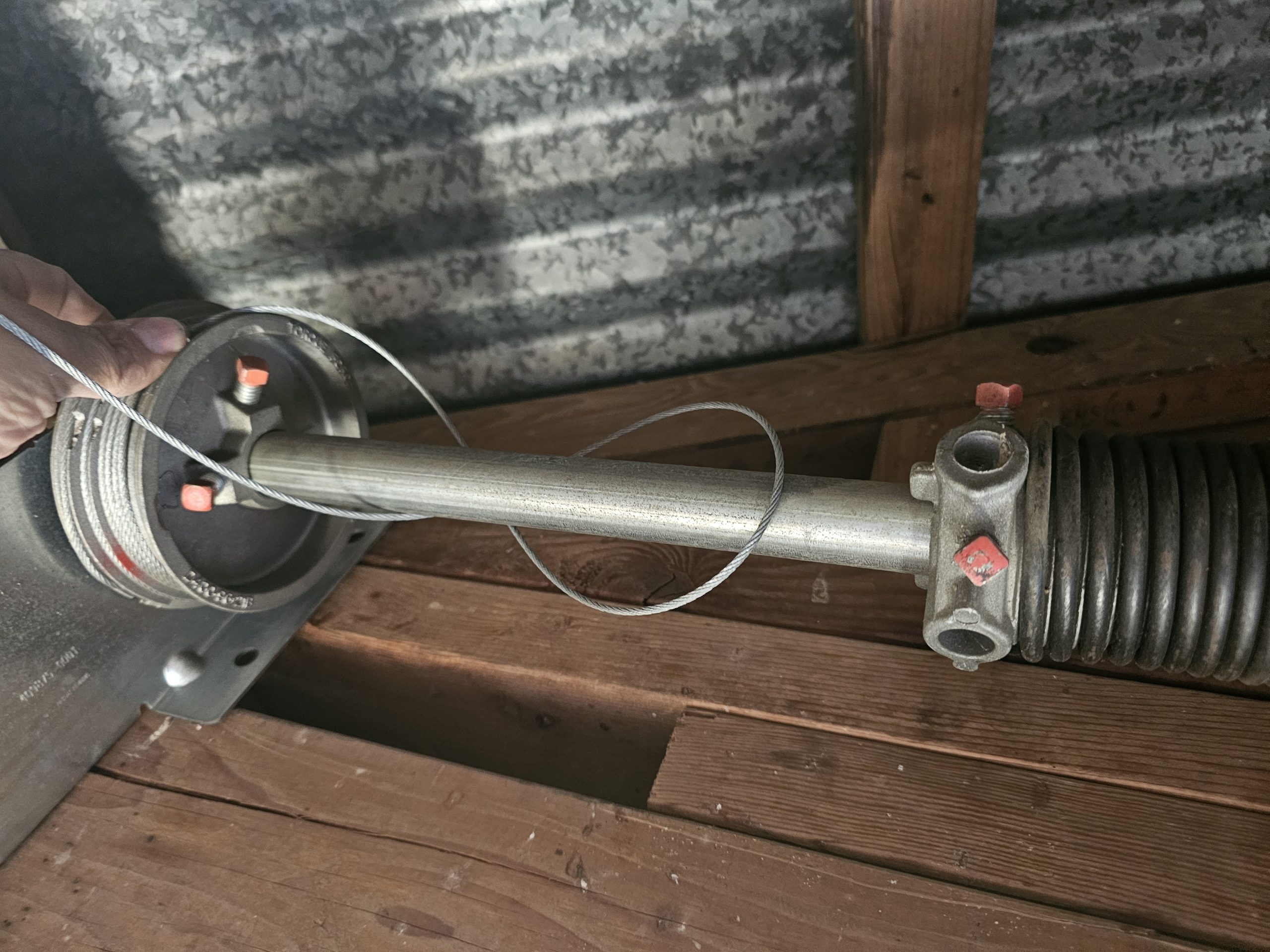
The image provided clearly shows a garage door cable dislodged from its drum, a common yet serious malfunction that can render your garage door inoperable and unsafe. As a Master Garage Door Technician, I cannot stress enough the importance of understanding the underlying causes and, more critically, the necessity of professional intervention for such repairs.
Understanding Your Garage Door Cable System
Your garage door operates on a finely tuned system of springs, cables, and drums. The torsion springs, mounted on a shaft above the door, provide the necessary counterbalance to lift the heavy door. Cables attach to the bottom corners of the door and wrap around cable drums on the ends of the torsion shaft. As the door opens, the cables wind onto the drums, and as it closes, they unwind, transferring the spring’s energy to lift and lower the door smoothly and safely. When a cable comes off the drum, this delicate balance is disrupted, leading to immediate operational problems and significant safety hazards.
Why Do Garage Door Cables Come Off the Drum? Common Causes
Several factors can lead to a garage door cable dislodging from its drum. Identifying the potential cause is crucial for a lasting repair, though diagnosis and repair should always be left to a professional.
Broken Torsion Spring
This is one of the most frequent culprits. When a torsion spring breaks, it loses its ability to counterbalance the door’s weight. The sudden loss of tension causes the cables to slacken and unwind from the drums, often resulting in the door falling unevenly or getting stuck.
Misaligned or Damaged Tracks
The tracks guide your garage door’s rollers. If the tracks become bent, misaligned, or obstructed, the door can bind or move unevenly. This jerky motion can cause the cables to jump off the drums, especially if the door is forced.
Worn or Damaged Cable Drums
Over time, the grooves on the cable drums can wear down, making it difficult for the cables to spool correctly. If the drum itself is damaged, cracked, or improperly installed, the cable may not stay in its designated path.
Frayed or Damaged Cables
Cables are made of multiple strands of steel wire. If these strands begin to fray or break due to age, rust, or friction, the cable can lose its integrity and snap or slip off the drum.
Obstructions or Imbalance
An obstruction in the door’s path or an imbalance in the door’s weight distribution (e.g., a panel becoming heavier) can cause the door to struggle, leading to excessive strain on one side and potentially forcing a cable off its drum.
Loose or Improperly Installed Components
If the cables were not properly secured to the drums during installation or if the drums themselves become loose on the torsion shaft, the cable can easily come off.
The Dangers of a Dislodged Garage Door Cable
WARNING: Garage door systems, especially torsion springs and cables, are under extreme tension. Attempting to repair these components without proper training, tools, and safety precautions can lead to severe injury, dismemberment, or even death. Never attempt to DIY repair garage door springs, cables, or heavy panels.
CRITICAL SAFETY RULE: For your safety and the longevity of your garage door system, any issues involving springs, cables, or heavy door panels MUST be handled by a qualified and experienced garage door technician. These components are under immense tension and can cause severe injury or death if mishandled. Do not attempt to adjust, repair, or replace them yourself.
A dislodged cable means the door is no longer properly supported or balanced. This can lead to:
- Sudden Door Collapse: The door, weighing hundreds of pounds, can fall unexpectedly, causing severe injury or damage to property, vehicles, or people.
- Further Damage: Attempting to operate a door with a dislodged cable can cause more extensive damage to the tracks, rollers, panels, and even the opener itself.
- Entrapment: A falling or stuck door poses a serious risk of entrapment.
Troubleshooting a Dislodged Cable (For Identification, Not DIY Repair)
While you should never attempt to fix the cable yourself, understanding what to look for can help you communicate the issue effectively to a professional technician:
- Visual Inspection: Carefully observe the cable and drum. Is the cable completely off the drum, or just partially? Is it frayed or broken?
- Check for Obstructions: Look for anything blocking the door’s path or caught in the tracks.
- Listen for Unusual Noises: Did you hear a loud bang (often indicative of a broken spring) or grinding noises before the cable came off?
- Observe Door Movement: Does the door sag on one side? Is it completely stuck, or does it move unevenly?
- Inspect the Spring: From a safe distance, look at the torsion spring above the door. Is it visibly broken (a gap in the coils)?
Causes vs. Solutions
Here’s a quick comparison of common causes and their professional solutions:
| Cause | Professional Solution |
|---|---|
| Broken Torsion Spring | Spring replacement (often both springs for balanced operation). |
| Misaligned/Damaged Tracks | Track realignment, repair, or replacement. |
| Worn/Damaged Cable Drums | Drum replacement and cable re-spooling. |
| Frayed/Damaged Cables | Cable replacement (always both cables for balance). |
| Obstruction/Imbalance | Obstruction removal, door balance adjustment, or panel repair/replacement. |
| Loose Components | Tightening, re-securing, and proper adjustment of all components. |
Why Professional Intervention is Non-Negotiable
Attempting to re-spool a cable or repair any part of the torsion system yourself is extremely dangerous. Professional garage door technicians possess the specialized tools, training, and experience to safely:
- Release spring tension safely.
- Replace broken springs and cables.
- Re-spool cables correctly onto drums.
- Align tracks and balance the door.
- Perform a comprehensive safety inspection to prevent future issues.
They understand the physics of the system and can ensure that the door operates smoothly, safely, and efficiently after the repair.
Conclusion
A garage door cable off the drum is a clear indicator of a serious underlying problem that requires immediate attention. Prioritize your safety and the longevity of your garage door system by contacting a qualified garage door technician as soon as you notice this issue. Never attempt to force the door or perform DIY repairs on high-tension components. A professional can quickly diagnose the root cause and execute a safe, effective repair, restoring your garage door to optimal working condition.