
What is a Commercial Loading Dock Door and How Does a Dock Leveler Work?
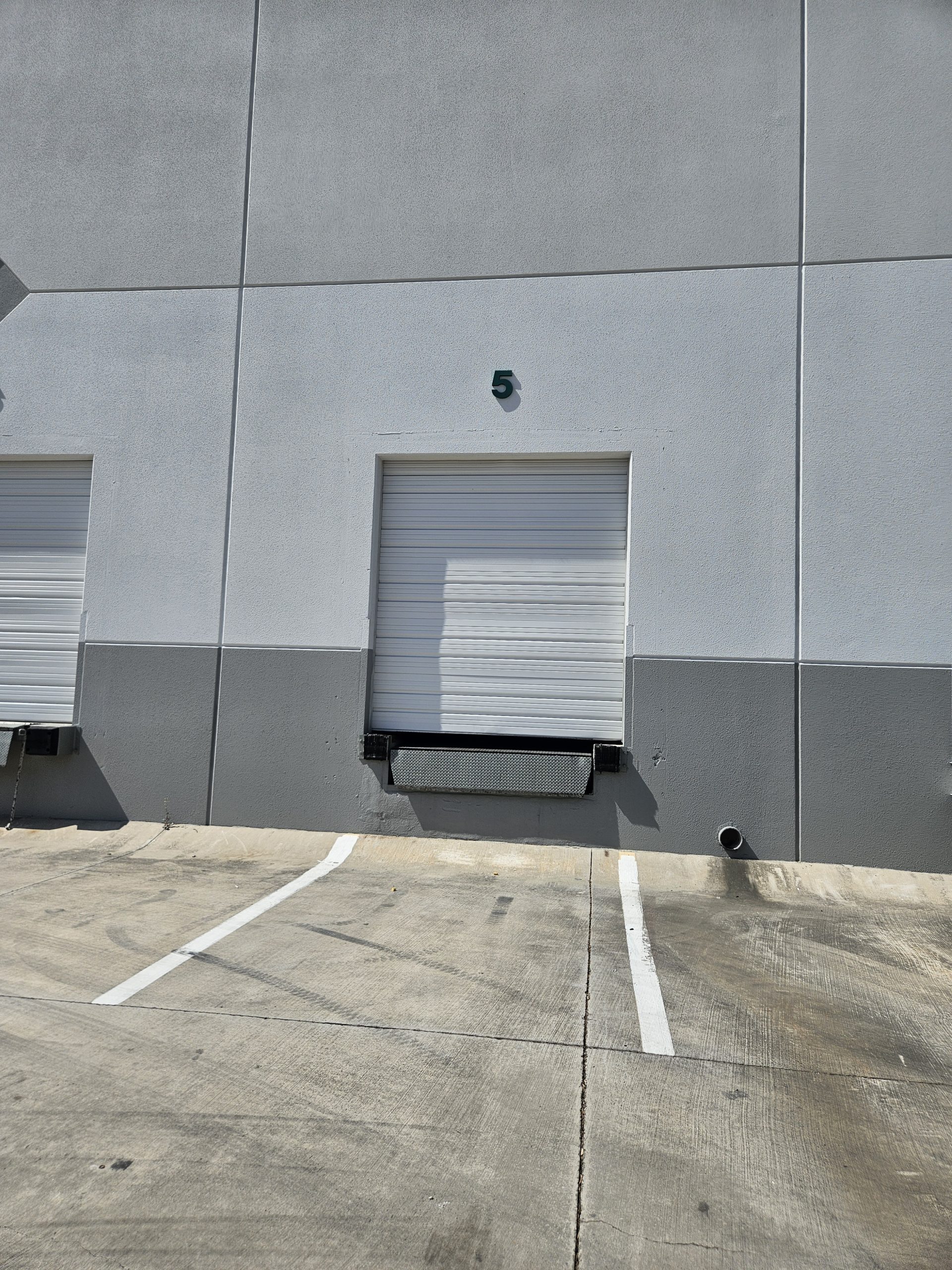
A commercial loading dock door, like the roll-up door pictured, is essential for securing warehouses and facilitating efficient material transfer. The accompanying dock leveler bridges the gap between the truck bed and the loading dock, ensuring a smooth and safe transition for forklifts and personnel. Both components are vital for operational safety and productivity in logistics.
In the world of logistics and warehousing, the efficiency and safety of loading and unloading operations are paramount. The image provided offers a clear view of a standard commercial loading dock setup, featuring a robust roll-up garage door and an integrated dock leveler. These two components work in tandem to create a functional and secure point for material transfer between a facility and transport vehicles.
Understanding Commercial Loading Dock Doors
Commercial garage doors, particularly those found at loading docks, are designed for heavy-duty use, security, and energy efficiency. Unlike residential garage doors, they face constant traffic, harsh weather conditions, and the potential for impact from machinery. The door in the image is a roll-up sheet door, a common type for commercial applications due to its durability, minimal vertical clearance requirements, and relatively low maintenance.
Types of Commercial Doors
- Roll-Up Sheet Doors: Constructed from corrugated steel sheets that roll up into a coil above the opening. They are highly durable and space-saving, ideal for high-traffic loading docks.
- Sectional Doors: Composed of several horizontal panels hinged together, moving on tracks. They can be insulated for climate control and offer various window options.
- High-Speed Doors: Designed for rapid opening and closing, crucial for maintaining environmental control and improving traffic flow in busy facilities.
The Indispensable Dock Leveler
Directly beneath the roll-up door in the image, you can see a dock leveler. This piece of equipment is arguably one of the most critical components of any loading dock. Its primary function is to compensate for the height difference and gap between the warehouse floor and the bed of a truck or trailer, creating a seamless ramp for forklifts, pallet jacks, and other material handling equipment.
How Dock Levelers Work
When a truck backs into the loading dock, the dock leveler is activated. It typically raises from its stored position, and a hinged lip extends outward to rest securely on the truck bed. This creates a stable and safe bridge, allowing equipment to move freely between the facility and the vehicle. Once loading or unloading is complete, the leveler retracts and returns to its flush, stored position, allowing the door to close securely.
Common Dock Leveler Types
- Mechanical Dock Levelers: Operated manually with a pull chain, using springs to assist in raising and lowering. They are cost-effective and reliable.
- Hydraulic Dock Levelers: Powered by a hydraulic pump and cylinders, offering push-button operation. They provide smoother, more precise control and are ideal for high-volume operations.
- Air-Powered Dock Levelers: Utilize an airbag system to raise and lower the deck, offering similar benefits to hydraulic systems but often with fewer moving parts.
Maintaining Your Commercial Loading Dock System
Regular maintenance is crucial for both the commercial garage door and the dock leveler to ensure their longevity, reliability, and most importantly, the safety of your personnel. Neglecting maintenance can lead to costly downtime, inefficient operations, and severe accidents.
SAFETY WARNING: Commercial loading dock doors and dock levelers involve extremely heavy components, powerful springs, cables, and hydraulic systems under high tension or pressure. Attempting repairs without proper training and tools can lead to severe injury or death.
CRITICAL SAFETY RULE: Never attempt DIY repairs on commercial garage door springs, cables, or heavy panels, nor on the hydraulic or mechanical systems of a dock leveler. These components are extremely dangerous. Always contact a qualified and professional garage door technician for any maintenance or repair work to prevent severe injury or death.
Common Issues and Professional Solutions
While the image doesn’t show a specific issue, commercial loading dock systems can encounter various problems. Here’s a look at common causes and their professional solutions:
| Cause of Issue | Professional Solution |
|---|---|
| Commercial door not opening/closing smoothly or completely. | Professional inspection of tracks, rollers, springs, cables, and motor; lubrication, adjustment, or replacement of worn parts. Sensor alignment for safety. |
| Dock leveler fails to raise, lower, or extend its lip. | Technician will check hydraulic fluid levels, pump motor, electrical connections, control panel, and mechanical linkages. Repair or replace faulty components. |
| Excessive noise or vibration during door or leveler operation. | Professional diagnosis of worn bearings, misaligned tracks, loose hardware, or damaged springs/cables. Lubrication and adjustment or replacement of parts. |
| Damage to door panels or dock leveler deck from impact. | Assessment by a professional for structural integrity; replacement of damaged panels or sections of the dock leveler deck. |
Troubleshooting Tips (for professional assessment)
If you encounter an issue with your commercial loading dock system, here are initial observations you can make before calling a professional:
- Check for Obstructions: Ensure nothing is blocking the door’s path or the dock leveler’s movement.
- Power Supply: Verify that the system has power and that circuit breakers haven’t tripped.
- Visual Damage: Note any visible damage to the door panels, tracks, cables, springs, or the dock leveler’s deck or lip.
- Control Panel: If applicable, check the control panel for any error codes or unresponsive buttons.
- Listen for Unusual Sounds: Report any grinding, squealing, or banging noises to your technician.
Remember, these are merely observational steps. Any actual repair or adjustment must be performed by a certified professional to ensure safety and proper functionality.