
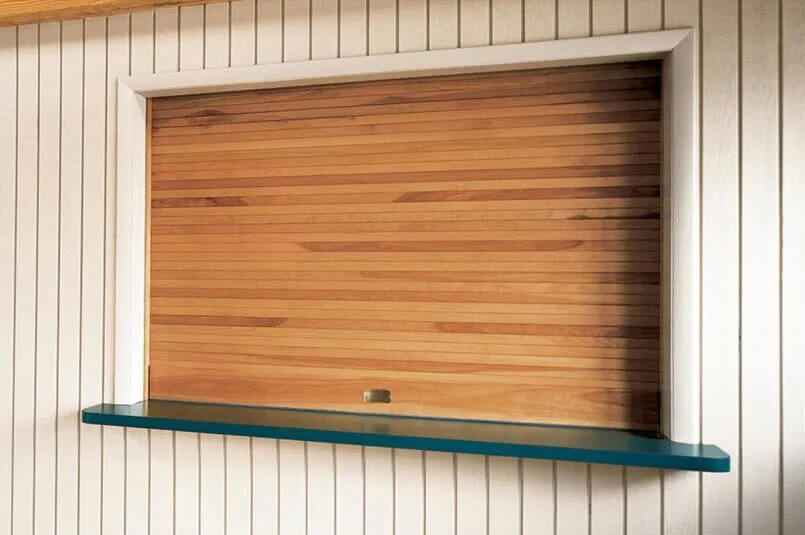
The image displays a wooden tambour door, commonly known as a roll-up pass-through or cabinet door. These doors are characterized by their flexible, slatted construction that slides vertically or horizontally into a hidden pocket or track. They offer a space-saving and aesthetically pleasing solution for concealing openings in kitchens, offices, or entertainment centers, providing both functionality and a clean, uncluttered look.
As a Master Garage Door Technician with extensive experience in various roll-up mechanisms, I often encounter questions about these versatile wooden roll-up doors. While they differ significantly from the heavy-duty garage doors designed for vehicles, the principles of smooth operation, proper maintenance, and understanding their unique mechanics are very similar. These doors, often referred to as tambour doors, are a fantastic addition to any space, offering both aesthetic appeal and practical functionality by neatly disappearing when open.
Tambour doors consist of multiple narrow wooden slats, or ‘tambours,’ joined together to form a flexible curtain. This curtain slides along tracks, typically into a concealed recess above or to the side of the opening. They are commonly found in kitchen pass-through windows, appliance garages, entertainment centers, and office cabinetry. Their design allows them to open without requiring swing space, making them ideal for compact areas where traditional hinged doors would be impractical.
Understanding How Your Wooden Roll-Up Door Works
At their core, wooden roll-up doors operate on a simple yet ingenious system. The flexible curtain of slats is guided by tracks, often made of wood or plastic, which curve into a storage area. Some designs use a spring-loaded mechanism to assist in opening and closing, similar to lighter garage door systems, while others rely purely on gravity and manual guidance. The key to their smooth operation lies in the precision of the tracks and the flexibility of the slat connections.
Common Issues and Their Causes
Even with their robust design, wooden roll-up doors can encounter issues. Understanding the common problems and their root causes is the first step toward effective troubleshooting and maintenance.
- Sticking or Binding: Often caused by dirt and debris in the tracks, lack of lubrication, or humidity causing the wood to swell.
- Misalignment: Tracks can become loose or damaged, leading to the door not sliding smoothly or getting stuck.
- Broken or Damaged Slats: Individual wooden slats can crack, warp, or detach, affecting the door’s integrity and flexibility.
- Difficulty Opening/Closing: Could indicate issues with the spring mechanism (if present), excessive friction, or track obstruction.
Safety Warning: Always exercise caution when working with any roll-up mechanism. While tambour doors typically do not involve the extreme tension of heavy garage door springs, improper handling of tracks, slats, or internal mechanisms can still lead to pinched fingers, unexpected movement, or damage to the door. Ensure the door is stable and supported before attempting any adjustments or repairs.
Maintaining Your Wooden Roll-Up Door
Regular maintenance is crucial for extending the life and ensuring the smooth operation of your wooden roll-up door.
Regular Cleaning
Dust, grime, and food particles can accumulate in the tracks, creating friction. Use a vacuum cleaner with a narrow attachment to remove loose debris, followed by a damp cloth to wipe down the tracks. Ensure the tracks are completely dry before proceeding.
Lubrication
For wooden tracks, a dry lubricant like silicone spray or a paraffin wax stick can significantly reduce friction. For plastic tracks, silicone spray is usually best. Apply sparingly and wipe off any excess. Avoid oil-based lubricants on wood, as they can attract more dirt and cause swelling.
Inspecting Slats and Tracks
Periodically check the wooden slats for signs of warping, cracking, or detachment. Address minor damage promptly to prevent it from worsening. Inspect the tracks for any signs of damage, misalignment, or loose fasteners. Tighten any screws that may have come loose over time.
Troubleshooting Common Tambour Door Problems
- Door is Sticking: Clean and lubricate the tracks thoroughly. Check for swollen wood due to humidity; a dehumidifier might help.
- Door is Crooked/Misaligned: Inspect the tracks for damage or loose mounting. Gently try to guide the door back into alignment. If tracks are bent, they may need repair or replacement.
- Slats are Damaged: For minor cracks, wood glue and clamps can sometimes work. For severely damaged or detached slats, replacement might be necessary. This often requires disassembling part of the door.
- Door is Hard to Open/Close (with spring assist): The spring mechanism might need adjustment or replacement. This is a task best left to professionals due to potential tension.
When to Call a Professional
CRITICAL SAFETY RULE: Never recommend DIY repairs for springs, cables, or heavy panels. Always state that a professional technician must handle it to prevent severe injury or death. While the wooden roll-up door pictured is not a heavy vehicle garage door, the underlying principle of safety for *any* door mechanism involving tension, complex moving parts, or significant weight (as found in traditional garage doors) remains paramount. For heavy garage doors, attempting DIY repairs on springs or cables can result in catastrophic failure, leading to severe injury or death. For the lighter tambour door, if the issue involves internal spring mechanisms, track misalignment that could cause the door to fall, or extensive damage to slats, it is always safest to consult a professional to prevent personal injury or further damage to the unit.
You should contact a professional roll-up door technician if:
- The door’s internal spring mechanism is faulty.
- There is significant damage to the tracks that you cannot easily repair.
- Multiple slats are broken or warped, requiring extensive replacement.
- The door consistently binds or jams despite cleaning and lubrication.
- You are unsure about the cause of the problem or uncomfortable performing the repair yourself.
Causes vs. Solutions for Wooden Roll-Up Doors
| Cause of Issue | Common Solution |
|---|---|
| Dirt/Debris in Tracks | Clean tracks thoroughly with vacuum and damp cloth. |
| Lack of Lubrication | Apply dry lubricant (silicone spray or paraffin wax) to tracks. |
| Wood Swelling (Humidity) | Ensure proper humidity control; consider light sanding if severe (professional recommended). |
| Misaligned/Damaged Tracks | Inspect and tighten loose fasteners; professional repair/replacement for bent tracks. |
| Broken/Warped Slats | Repair minor damage with wood glue; replace severely damaged slats (professional often needed). |
| Faulty Spring Mechanism | Professional adjustment or replacement of tension springs. |
By understanding the mechanics and common issues of your wooden roll-up door, you can ensure its longevity and smooth operation. Regular maintenance and knowing when to call a professional will keep your tambour door functioning beautifully for years to come.