
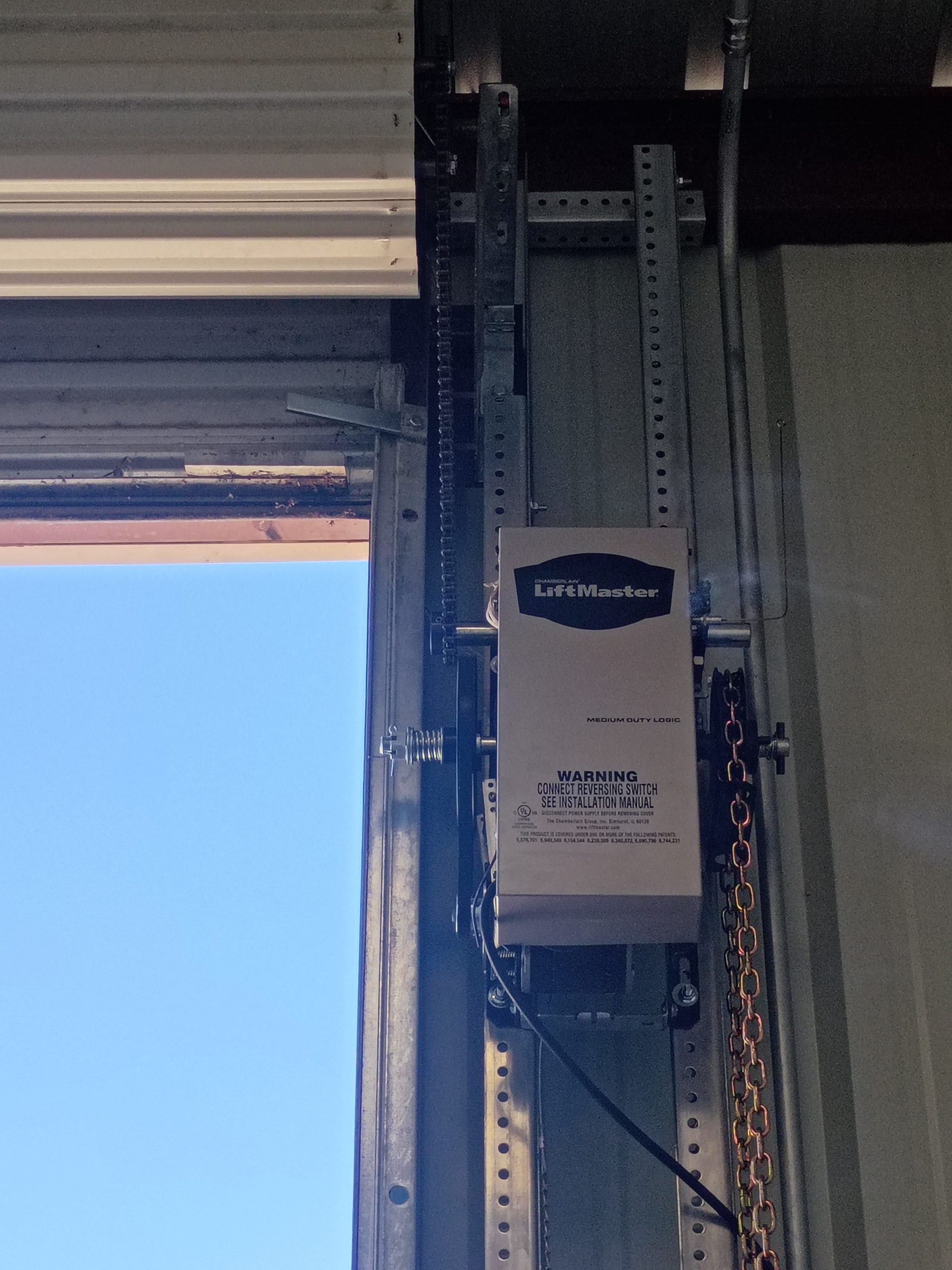
LiftMaster Medium Duty Logic Commercial Jackshaft Garage Door Openers are robust, space-saving solutions for commercial and industrial settings, designed for efficient and secure operation of sectional doors. They mount on the side of the door, freeing up valuable ceiling space, and incorporate advanced logic boards for reliable performance and crucial safety features like reversing switches.
SAFETY WARNING: Commercial garage doors and their operating systems, especially jackshaft openers, involve significant mechanical forces, high tension components, and complex electrical systems. Attempting to install, repair, or adjust these systems without proper training, specialized tools, and adherence to safety protocols can lead to severe injury, electrocution, or even death.
CRITICAL SAFETY RULE: Never attempt DIY repairs or installations involving garage door springs, cables, or heavy door panels. These components are under extreme tension or are incredibly heavy and can cause catastrophic failure and severe injury or death if mishandled. For any work on commercial garage door openers, especially installation, major adjustments, or repairs, always contact a certified professional garage door technician. Their expertise ensures safety, proper function, and compliance with all relevant codes and standards.
What is a LiftMaster Medium Duty Logic Commercial Jackshaft Opener?
A LiftMaster Medium Duty Logic Commercial Jackshaft Garage Door Opener represents a sophisticated solution for commercial and industrial environments. Unlike traditional trolley-style openers that mount centrally on the ceiling, a jackshaft opener is installed on the side of the garage door, typically above the door’s opening and connected directly to the door’s torsion bar. This side-mount configuration is particularly advantageous for facilities where ceiling space is at a premium, such as warehouses, auto service centers, or any building requiring overhead clearance for lifts, lighting, or HVAC systems.
The ‘Medium Duty’ designation indicates that these openers are built to handle a significant number of operational cycles per day, making them suitable for businesses with moderate to high traffic. The ‘Logic’ aspect refers to the advanced control board integrated into the opener, which provides intelligent operation, precise limit settings, diagnostic capabilities, and enhanced safety features, ensuring smooth and reliable performance.
Key Features and Benefits
- Space-Saving Design: Frees up overhead space, allowing for better utilization of the facility.
- Reliable Chain Drive: As seen in the field photo, these units often utilize a robust chain drive system for dependable and consistent door operation.
- Medium-Duty Performance: Engineered for frequent use, offering durability and longevity in demanding commercial settings.
- Advanced Safety Features: Incorporates essential safety mechanisms, including photo-electric sensors and, critically, a reversing switch to prevent entrapment and damage.
- Enhanced Security: Provides secure access control and robust locking mechanisms to protect commercial assets.
- Quiet Operation: Modern designs often include features to reduce noise, contributing to a more comfortable work environment.
Installation and Critical Safety Considerations
The proper installation of a LiftMaster Medium Duty Logic Commercial Jackshaft Opener is paramount for both its functionality and, more importantly, the safety of personnel. The opener must be securely mounted to the building’s structure, and correctly aligned with the door’s torsion bar. Electrical connections must adhere to local codes and manufacturer specifications, often requiring a dedicated circuit.
The warning label visible in the image, “WARNING CONNECT REVERSING SWITCH SEE INSTALLATION MANUAL,” highlights a critical safety component. A reversing switch is designed to detect obstructions and automatically reverse the door’s direction, preventing injury or damage. Proper connection and calibration of this switch, along with other safety devices like photo eyes, are non-negotiable steps in the installation process.
Why Professional Installation is Non-Negotiable
Given the complexity and power of commercial garage door systems, professional installation is not just recommended, it’s essential. Certified technicians possess the expertise to:
- Ensure correct mounting and structural integrity.
- Properly wire the opener, including all safety devices and control stations.
- Accurately set the door’s travel limits and force adjustments.
- Calibrate and test all safety features, such as the reversing switch and photo eyes, to meet stringent safety standards.
- Comply with all local building codes and safety regulations.
- Handle the heavy-duty components and high-tension springs safely.
Common Operational Issues and Maintenance Tips
Even with robust commercial openers, issues can arise. Regular maintenance is key to preventing downtime and extending the life of your system. This includes routine lubrication of moving parts, inspection of chains and sprockets, and checking the tension of the drive chain. Safety devices should be tested periodically to ensure they are functioning correctly.
| Cause | Solution |
|---|---|
| Opener not responding to controls | Check power supply, circuit breaker, remote batteries, and ensure safety sensors (photo eyes) are aligned and unobstructed. |
| Door reverses unexpectedly or won’t close | Inspect photo eyes for obstructions or misalignment. Ensure the reversing switch is correctly connected and functioning. Check for obstructions in the door’s path. |
| Noisy operation | Lubricate moving parts (chain, sprockets, bearings). Inspect for worn or damaged components. |
| Door not opening/closing fully | Adjust travel limits according to the manufacturer’s instructions (professional assistance recommended). Check for physical obstructions or issues with the door’s balance. |
| Motor runs but door doesn’t move | Check if the manual release is engaged. Inspect the drive chain for breaks or disconnections. |
Bulleted Troubleshooting List (For basic checks only)
- Check Power: Ensure the opener is plugged in and the circuit breaker hasn’t tripped.
- Remote Batteries: Replace batteries in remote controls if the opener isn’t responding.
- Photo Eyes: Inspect the safety sensors (photo eyes) located near the bottom of the door tracks. Ensure they are clean, aligned (lights usually indicate proper alignment), and free of obstructions.
- Obstructions: Look for any objects blocking the door’s path or interfering with the tracks.
- Manual Release: Verify the manual release mechanism is not engaged, which would disconnect the door from the opener.
- Unusual Noises: Listen for grinding, squealing, or scraping sounds, which may indicate a need for lubrication or professional inspection of worn parts.
For any issue beyond these basic checks, or if you are unsure, always contact a qualified garage door technician. Their expertise ensures the safe and efficient operation of your commercial door system.