
Direct Answer: Commercial rolling security grilles are robust access control systems for businesses, requiring regular professional maintenance to prevent common issues like getting stuck, slow operation, or excessive noise. These problems often stem from worn components, track obstructions, or operator malfunctions. Due to high tension and heavy parts, always consult a certified garage door technician for diagnostics and repairs to ensure safety and optimal performance.
Understanding Commercial Rolling Security Grilles
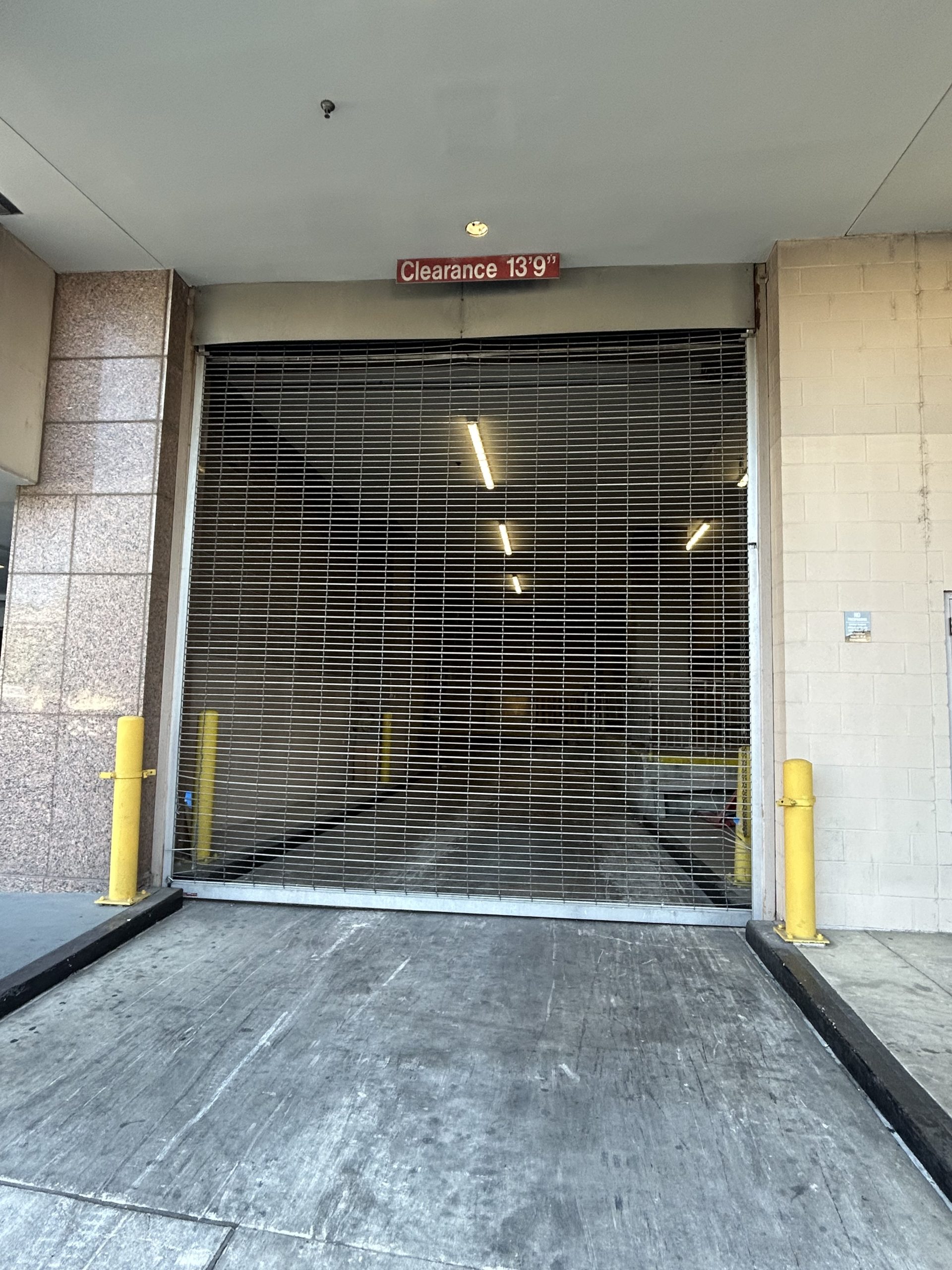
Commercial rolling security grilles, like the one pictured, are indispensable for businesses needing secure access control while maintaining visibility or airflow. Commonly found in parking garages, retail storefronts, and loading docks, these grilles are designed for heavy-duty use, providing a formidable barrier against unauthorized entry. Unlike solid rolling doors, grilles consist of interconnected metal links or bars that roll up into a compact coil above the opening. The “Clearance 13’9”” sign in the image highlights their role in managing vehicle height for safe passage in high-traffic commercial environments.
Key Components of a Rolling Security Grille
- Grille Curtain: The main body, made of interconnected metal links or bars.
- Side Guides/Tracks: Channels that guide the grille during operation.
- Bottom Bar: The lowest section, often with safety edges.
- Counterbalance System: Spring assembly (torsion or helical) in the header, assisting the operator.
- Operator/Motor: The electric motor powering the grille’s movement.
- Control System: Includes push buttons, remotes, and safety sensors.
Common Issues with Commercial Rolling Security Grilles
Despite their robust construction, commercial rolling security grilles can develop operational problems. Early recognition prevents more significant damage and costly repairs.
Operational Problems
- Grille Gets Stuck or Operates Slowly: A common and disruptive issue, hindering business and security.
- Excessive Noise: Squealing, grinding, or rattling sounds often signal underlying problems.
- Crooked or Uneven Movement: Indicates issues with tracks, counterbalance, or the grille curtain itself.
- Damaged Grille Links: Bent or broken links impair smooth operation and compromise security.
Safety Warning: Commercial rolling security grilles operate under extreme tension and involve very heavy components. Attempting to repair or adjust these systems without proper training and tools can lead to severe injury or even death. Always prioritize safety and call a professional.
CRITICAL SAFETY RULE: Never attempt DIY repairs on garage door springs, cables, or heavy panels. These components are under immense tension and can cause severe injury or death if mishandled. Always contact a qualified and certified garage door technician for any repairs involving these critical parts. Professional expertise is essential to ensure safety and proper functionality.
Causes vs. Solutions for Rolling Security Grille Issues
| Common Cause | Professional Solution |
|---|---|
| Worn or Damaged Tracks/Guides | Inspection, cleaning, lubrication, or replacement of tracks. Realignment for smooth travel. |
| Operator/Motor Malfunction | Diagnosis of electrical issues, motor repair or replacement, adjustment of limit switches. |
| Counterbalance System Imbalance (Springs) | Professional adjustment or replacement of torsion/helical springs to restore proper balance. |
| Obstructions in Tracks or Safety Sensors | Removal of debris, cleaning and realignment of photo-eye sensors. |
| Damaged Grille Links/Slats | Replacement of individual damaged links or sections of the grille curtain. |
| Lack of Lubrication | Application of appropriate lubricants to moving parts (tracks, bearings) by a technician. |
Troubleshooting Your Commercial Rolling Security Grille (Observation Only)
While DIY repairs are strictly prohibited, you can perform basic observations to aid your technician:
- Listen for Unusual Noises: Note any grinding, squealing, or scraping sounds and their approximate location.
- Observe Movement: Does the grille move unevenly? Is it slower than usual?
- Check for Obstructions: Visually inspect tracks and the bottom bar area for debris.
- Examine the Grille Curtain: Look for bent, broken, or misaligned links or bars.
- Test Safety Sensors: If applicable, check if photo-eye sensors are clear (alignment by pro).
- Note Control System Response: Does the wall button or remote respond consistently?
The Importance of Professional Maintenance
Regular preventative maintenance by a certified technician is crucial for the longevity, safety, and reliable operation of your commercial rolling security grille. Professionals can identify potential issues early, lubricate moving parts, adjust tension, and ensure all safety features function correctly. This proactive approach minimizes downtime, extends investment life, and maintains premises security.
For any issues with your commercial rolling security grille, especially those involving the counterbalance system or operator, always contact a professional garage door service. Their expertise ensures repairs are performed safely and effectively, keeping your business secure and operational.