
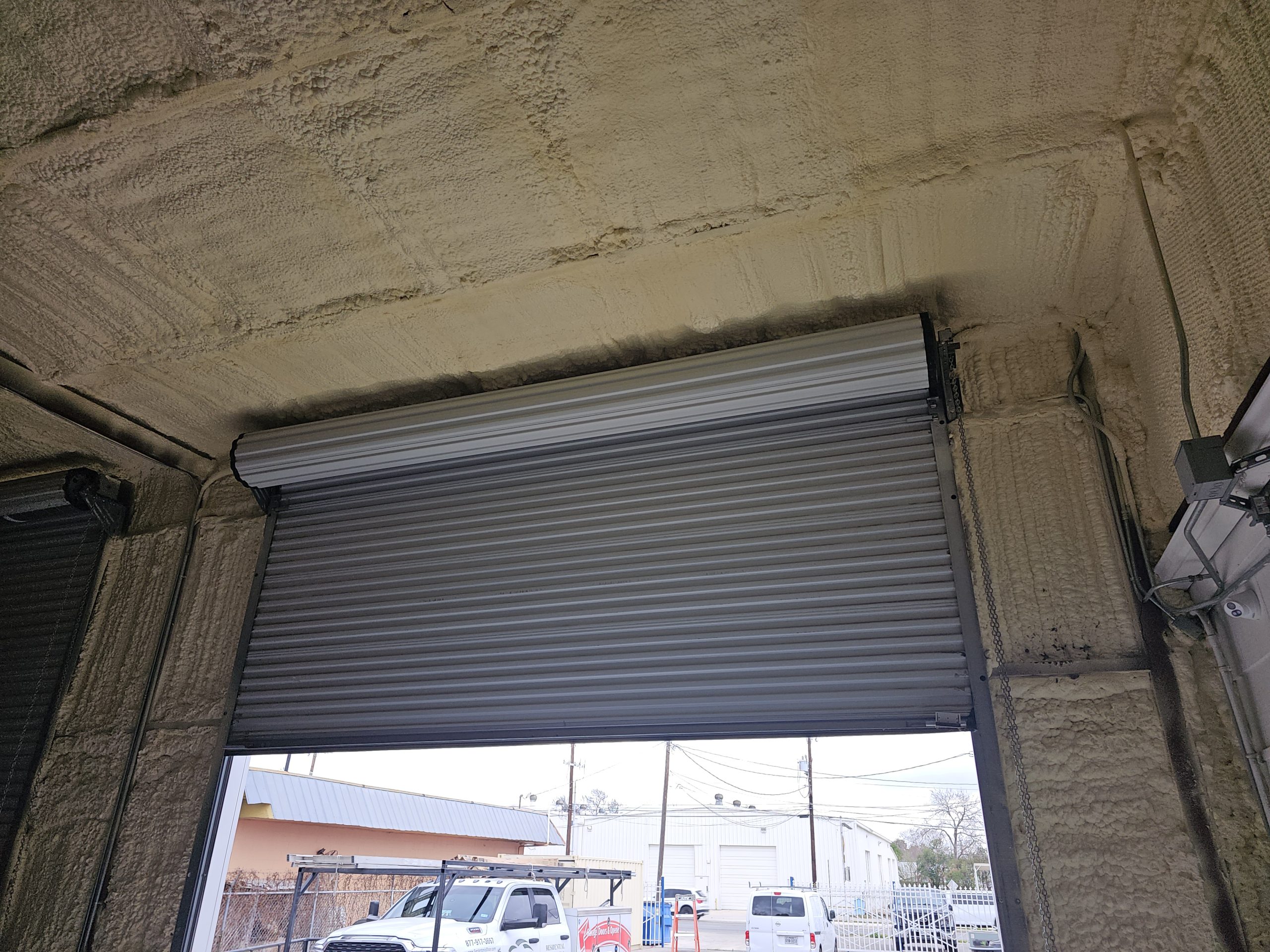
Installing a roll-up garage door in a spray foam insulated commercial building requires meticulous planning and professional execution to ensure optimal energy efficiency, structural integrity, and long-term performance. Key aspects include robust framing, careful integration of the insulation to maintain a tight seal without hindering door operation, and precise installation of mechanical and electrical components by certified technicians.
Commercial and industrial facilities often rely on robust roll-up (or coiling) garage doors for security, operational efficiency, and space-saving benefits. When these doors are integrated into buildings utilizing spray foam insulation, as seen in the provided image, the installation process demands specific considerations to maximize the building’s thermal performance and the door’s functionality. Spray foam insulation offers superior R-value and an excellent air seal, making it a popular choice for energy-conscious businesses. However, its application around dynamic openings like garage doors requires expertise to prevent issues.
Key Considerations for Roll-Up Door Installation in Insulated Structures
Framing and Structural Support
The foundation of any durable garage door installation is adequate structural support. Roll-up doors, especially larger commercial models, are heavy and exert significant forces during operation. The door opening must be framed with robust headers and jambs capable of supporting the door’s weight, the operating mechanism (like the chain hoist visible), and the tracks. In a spray foam insulated building, this framing must be in place before insulation application to ensure the foam adheres properly and doesn’t compromise the structural integrity or the door’s mounting points. Any movement in the frame due to insufficient support can lead to misalignment, premature wear, and energy loss.
Insulation Integration and Sealing
Spray foam insulation creates a continuous thermal envelope, but this can be challenging around a garage door opening. The goal is to achieve a tight seal between the door frame and the building structure without impeding the door’s movement. Technicians must ensure that the spray foam is applied carefully, filling all gaps and voids around the perimeter of the door opening, but not encroaching on the door tracks or moving parts. Proper sealing with weatherstripping and bottom seals is crucial to prevent air infiltration and exfiltration, preserving the energy efficiency benefits of the spray foam. Thermal breaks might also be considered in extreme climates to prevent heat transfer through the door frame itself.
Electrical and Mechanical Systems
Many commercial roll-up doors are motorized for convenience and speed, requiring dedicated electrical wiring and controls. Even manually operated doors, like the chain hoist model in the image, have specific mounting requirements. Electrical conduits (also visible in the image) must be properly routed and secured, adhering to all local electrical codes. The placement of junction boxes, motor operators, and safety sensors needs to be planned to integrate seamlessly with both the door system and the building’s insulation without creating thermal bridges or access issues.
Professional Installation is Paramount
Given the complexities involved, professional installation is not just recommended but essential. Experienced technicians understand the nuances of integrating roll-up doors with various building materials and insulation types. They ensure proper alignment, balance, and sealing, which are critical for the door’s longevity, safety, and the building’s energy performance. DIY attempts can lead to costly repairs, safety hazards, and compromised insulation effectiveness.
Common Challenges and Solutions
| Challenge/Issue | Solution/Best Practice |
|---|---|
| Inadequate Structural Framing | Ensure robust, properly sized headers and jambs are installed before insulation and door mounting. |
| Poor Insulation Seal Around Door | Careful, precise application of spray foam; use of appropriate weatherstripping and perimeter seals. |
| Door Sticking or Binding | Professional alignment of tracks, lubrication of moving parts, and inspection for obstructions from insulation. |
| Compromised Thermal Envelope | Verify continuous insulation coverage, seal all gaps, consider thermal breaks for metal components. |
| Electrical System Malfunctions | Professional wiring, proper conduit installation, regular inspection of connections and controls. |
Troubleshooting Common Issues
- Drafts or Air Leaks: Inspect weatherstripping around the perimeter and the bottom seal. Check for gaps in the spray foam application around the door frame.
- Door Sticking or Operating Roughly: Examine tracks for obstructions (e.g., spray foam residue), ensure they are clean and lubricated. Check for track alignment and roller condition.
- Excessive Noise During Operation: Lubricate moving parts, inspect rollers and hinges for wear, and check for loose fasteners or misaligned components.
- Motor or Chain Hoist Malfunctions: For motorized doors, check power supply and remote batteries. For chain hoists, ensure the chain is free of kinks and the mechanism is lubricated.
- Door Not Closing Fully: Check for obstructions in the path of the door or issues with the limit settings on motorized doors.
WARNING: Garage doors, especially commercial roll-up doors, operate under extreme tension and involve heavy components. Attempting to repair or adjust springs, cables, or heavy door panels without proper training and specialized tools can result in severe injury or death. ALWAYS consult a qualified garage door professional for any repairs or adjustments involving these critical parts.
CRITICAL SAFETY RULE: Never attempt DIY repairs on garage door springs, cables, or heavy panels. These components are under immense tension and can cause severe injury or death if mishandled. Always entrust such tasks to a professional garage door technician who possesses the necessary expertise, tools, and safety protocols to perform the work safely and correctly.
In conclusion, the successful installation of a roll-up garage door in a spray foam insulated commercial building is a testament to careful planning and professional execution. By addressing structural support, insulation integration, and proper system setup, businesses can enjoy a secure, energy-efficient, and smoothly operating access point for years to come.