
Understanding a Collapsed or Derailed Garage Door: Causes, Dangers, and Professional Solutions
A garage door collapsing or falling off its tracks is a serious and dangerous issue, typically caused by broken cables, damaged rollers, misaligned tracks, or worn-out springs. This immediate hazard requires professional intervention due to the door’s immense weight and stored tension. Never attempt DIY repairs on a collapsed or derailed garage door.
WARNING: Garage doors operate under extreme tension from springs and are incredibly heavy. Attempting to repair a collapsed or derailed door yourself can lead to severe injury, amputation, or even death. Always contact a certified professional garage door technician immediately.
Understanding Garage Door Derailment and Collapse
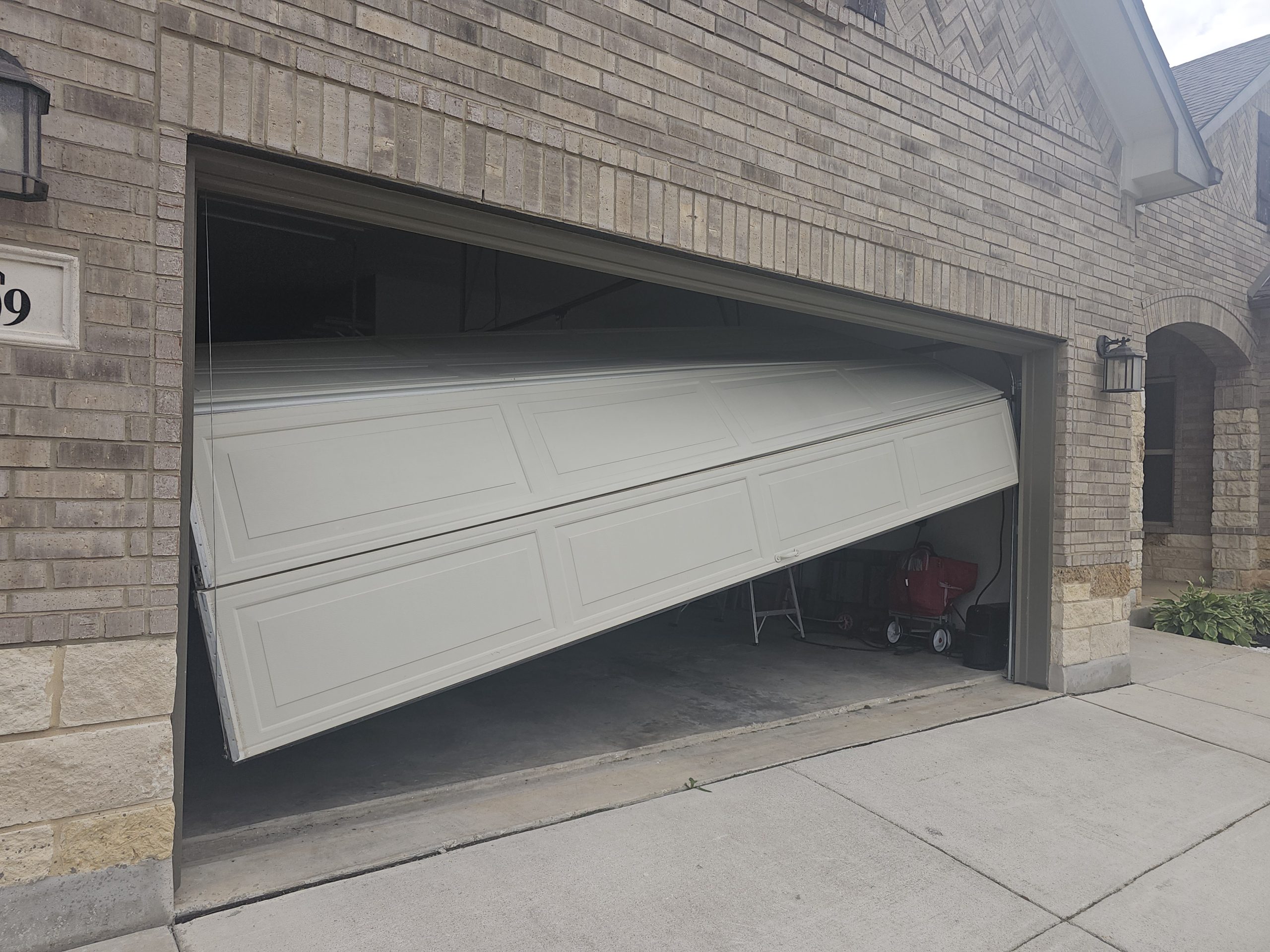
The image clearly depicts a garage door that has suffered a significant structural failure, with panels severely angled and the door partially collapsed. This isn’t just an inconvenience; it’s a major safety hazard. A garage door can weigh hundreds of pounds, and its operating system relies on a delicate balance of tension and alignment. When this balance is disrupted, the results can be catastrophic.
Common Causes of Garage Door Derailment and Collapse
Several factors can lead to a garage door coming off its tracks or collapsing. Identifying the root cause is crucial for proper repair and prevention, though this diagnosis should always be left to a professional:
- Broken or Frayed Cables: The most common culprit. The lift cables, which connect the bottom of the door to the spring system, bear the door’s weight. If one breaks, the door loses support on that side and will immediately fall or jam.
- Damaged or Worn Rollers: Rollers guide the door along the tracks. If they are bent, broken, or simply worn out, they can pop out of the track, causing the door to derail.
- Bent or Misaligned Tracks: Impact from a vehicle, loose mounting brackets, or even shifting house foundations can cause tracks to bend or pull away from the wall. Once the tracks are compromised, rollers cannot move smoothly, leading to derailment.
- Broken Springs: Torsion or extension springs counterbalance the door’s weight. A broken spring can cause the door to become incredibly heavy and difficult to lift, putting immense strain on other components like cables and rollers, often leading to their failure and subsequent derailment.
- Impact Damage: Accidentally backing into the garage door with a car is a common cause of bent panels, tracks, and rollers, leading to immediate derailment.
- Loose Hardware: Over time, nuts, bolts, and screws holding the tracks and other components can loosen, causing parts to shift and the door to lose its alignment.
- Lack of Maintenance: Neglecting regular lubrication and inspection can lead to premature wear of rollers, hinges, and other moving parts, increasing the likelihood of failure.
The Dangers of a Collapsed Garage Door
A collapsed garage door poses multiple severe risks:
- Physical Injury: The immense weight of the door can cause severe crushing injuries, amputations, or even fatalities if it falls on a person or pet.
- Property Damage: Falling door panels can damage vehicles, tools, or anything else inside or near the garage opening.
- Security Breach: A partially open or damaged door compromises the security of your home, leaving it vulnerable to intruders.
- Structural Damage: The impact of a collapsing door can damage the garage frame or surrounding structure, leading to more extensive and costly repairs.
What to Do When Your Garage Door Collapses
When faced with a collapsed or severely derailed garage door, your immediate actions are critical for safety:
- Secure the Area: Keep everyone, especially children and pets, far away from the door. Do not attempt to move or touch the door.
- Disconnect Power (if safe): If the door is partially open and connected to an opener, unplug the garage door opener from the power outlet to prevent accidental activation. Only do this if you can reach the outlet safely without going near the door.
- Contact a Professional: This is the most important step. Never attempt to fix a collapsed garage door yourself. The springs are under extreme tension, and the door panels are heavy and unwieldy. A trained and certified garage door technician has the specialized tools, knowledge, and experience to safely diagnose the problem and perform the necessary repairs without risking injury or further damage.
Preventing Future Derailments
Regular maintenance is key to preventing such dangerous incidents. While you should never attempt spring or cable repairs, you can perform visual checks:
- Annual Professional Inspections: Schedule a professional garage door technician to inspect and service your door at least once a year. They can identify worn parts, lubricate components, and ensure proper alignment and tension.
- Regular Visual Checks: Periodically inspect your tracks for bends or obstructions. Look at your rollers for signs of wear or damage. Listen for unusual noises during operation.
- Keep Tracks Clean: Clear any debris, dirt, or grease buildup from the tracks.
- Lubricate Moving Parts: Use a silicone-based lubricant on rollers, hinges, and springs (avoiding plastic parts and tracks themselves).
- Avoid DIY Repairs: For any issues involving springs, cables, or heavy panels, always call a professional.
Causes vs. Solutions: A Professional Perspective
| Common Cause | Professional Solution |
|---|---|
| Broken or Frayed Lift Cables | Cable replacement, re-spooling, and tension adjustment. Inspection of spring system. |
| Damaged or Worn Rollers | Roller replacement, re-insertion into tracks, and track alignment. |
| Bent or Misaligned Tracks | Track repair/replacement, re-securing mounting brackets, and full system alignment. |
| Broken Torsion or Extension Springs | Spring replacement (both springs usually replaced), re-balancing the door, and cable/roller inspection. |
| Impact Damage (e.g., vehicle collision) | Panel repair/replacement, track/roller repair, and full system re-calibration. |
| Loose Hardware | Tightening all fasteners, inspecting for wear, and ensuring proper track and component stability. |
Troubleshooting (for Assessment, Not DIY Repair)
If your garage door is showing signs of distress but hasn’t fully collapsed, here’s what you can observe before calling a professional:
- Is the door making grinding or scraping noises?
- Are any rollers visibly out of the track?
- Can you see any frayed or broken cables?
- Are the tracks bent, dented, or pulled away from the wall?
- Does the door feel unusually heavy when attempting to lift it manually (if safe to do so)?
- Are there any visible gaps in the torsion spring (indicating a break)?
- Is one side of the door significantly lower than the other when partially open?
Any of these observations warrant an immediate call to a professional technician. Do not attempt to operate the door further.
Conclusion
A collapsed or derailed garage door is a critical issue that demands immediate and professional attention. Prioritizing safety by securing the area and contacting a qualified technician is paramount. Regular maintenance and professional inspections are your best defense against such dangerous and costly failures, ensuring your garage door remains a functional and safe part of your home.