
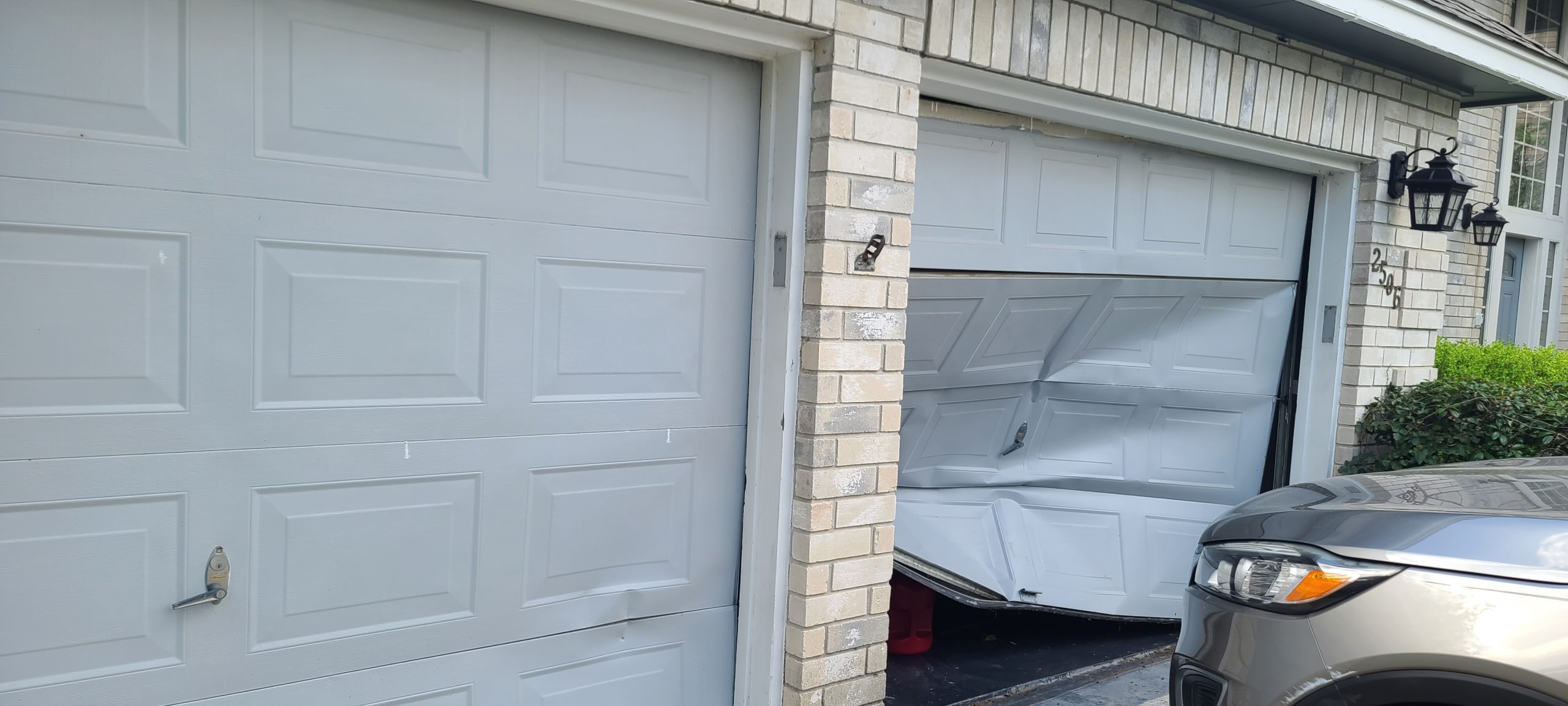
Understanding Severe Garage Door Damage: Crumpled, Bent, and Off Track
If your garage door is severely crumpled, bent, or off its tracks, it’s a clear sign of significant damage, often caused by impact (like a vehicle collision) or a catastrophic mechanical failure. This condition renders the door inoperable and highly dangerous, requiring immediate professional assessment and repair to prevent further damage or injury.
SAFETY WARNING: Garage doors operate under extreme tension from springs and are incredibly heavy. Attempting to repair a severely damaged, crumpled, or off-track garage door yourself can lead to severe injury, dismemberment, or even death. Never attempt to adjust or replace springs, cables, or heavy panels without professional training and specialized tools. Always contact a qualified garage door technician immediately.
What Causes a Garage Door to Become Crumpled, Bent, or Off Track?
The type of severe damage seen in the image, with panels bent and the door clearly out of its normal operating path, typically stems from one or more critical issues:
Vehicle Impact
This is one of the most common culprits for crumpled and bent garage door panels. An accidental collision with a car, whether backing out too quickly or misjudging distance, can exert immense force, causing panels to buckle, tracks to bend, and the entire door structure to become compromised. The image strongly suggests a vehicle impact as a primary cause, given the specific deformation of the lower panels.
Broken Springs or Cables
Garage door springs (torsion or extension) counterbalance the door’s weight, making it easy to open and close. If a spring breaks, the door’s full weight suddenly drops, often unevenly. This can cause the door to slam down, buckle panels, and pull cables off their drums, leading the door to go off its tracks and crumple under its own weight or the force of the opener trying to operate it.
Damaged or Obstructed Tracks
The tracks guide the rollers that allow the door to move smoothly. If tracks become bent, misaligned, or obstructed by debris, the rollers can pop out. Once off track, the door loses its structural support and can twist, bend, and crumple as the opener attempts to force it into an unnatural position.
Opener Malfunction
A malfunctioning garage door opener, especially one with faulty safety sensors or limits, might continue to exert force even when the door encounters an obstruction or is already off track. This sustained, misdirected force can exacerbate damage, leading to bent panels and further structural failure.
Weakened or Deteriorated Panels
Over time, garage door panels can weaken due to age, rust, or previous minor impacts. This deterioration makes them more susceptible to buckling and crumpling under stress, even from less severe incidents.
Why Professional Intervention is Non-Negotiable
Given the complexity and inherent dangers of a severely damaged garage door, professional intervention is not just recommended, it’s mandatory. A qualified technician will:
- Assess the Full Extent of Damage: Beyond what’s visible, internal components like springs, cables, rollers, and the opener mechanism may also be damaged.
- Ensure Safety: They have the tools and expertise to safely stabilize the door and prevent further collapse or injury during inspection and repair.
- Identify Root Causes: A professional can accurately diagnose why the damage occurred, preventing recurrence.
- Perform Correct Repairs: Whether it’s panel replacement, track realignment, spring replacement, or opener repair, they ensure all work is done to industry standards.
- Advise on Replacement vs. Repair: In cases of severe damage, replacing the entire door might be safer and more cost-effective than extensive repairs.
Troubleshooting (What NOT to Do) and What to Expect
As a homeowner, your primary troubleshooting step is to ensure no one attempts to operate or manually force the door. Here’s what you should do:
- Do NOT Operate the Door: Disconnect the opener if possible, but only if it can be done safely without touching the door itself.
- Clear the Area: Keep children, pets, and vehicles away from the damaged door.
- Visually Inspect (from a safe distance): Note any visible damage to panels, tracks, or cables to relay to the technician.
- Contact a Professional: Call a certified garage door technician immediately. Provide them with as much detail as possible, including photos if requested.
Causes vs. Solutions: A Professional’s Perspective
| Common Cause of Damage | Professional Solution |
|---|---|
| Vehicle Impact | Panel replacement, track repair/replacement, roller replacement, full door assessment. |
| Broken Springs/Cables | Spring replacement (both springs often recommended), cable replacement, re-alignment of door on tracks. |
| Damaged/Obstructed Tracks | Track repair/replacement, roller replacement, door re-alignment, lubrication. |
| Opener Malfunction | Opener repair/replacement, sensor adjustment, limit switch calibration, full door system check. |
| Weakened/Deteriorated Panels | Panel replacement, or full door replacement if multiple panels are compromised. |
In conclusion, a crumpled, bent, or off-track garage door is a serious issue that demands immediate professional attention. Prioritize safety by never attempting DIY repairs on such complex and dangerous systems. A certified technician will ensure your garage door is safely and correctly restored, or advise on a complete replacement if necessary.